
Set up a new wallet only in a trusted environment and understand what recovery material controls.
Open guide →imtoken
A multi-chain wallet, blockchain network and Web3 knowledge hub from imtoken
Manage Multi-chain Assets and Connect to Web3 with Clarity
Bring multi-chain assets, network selection, sending and receiving, DApp connections, token approvals, network knowledge and wallet security into one clear operating path. Review every request before it becomes an on-chain action.
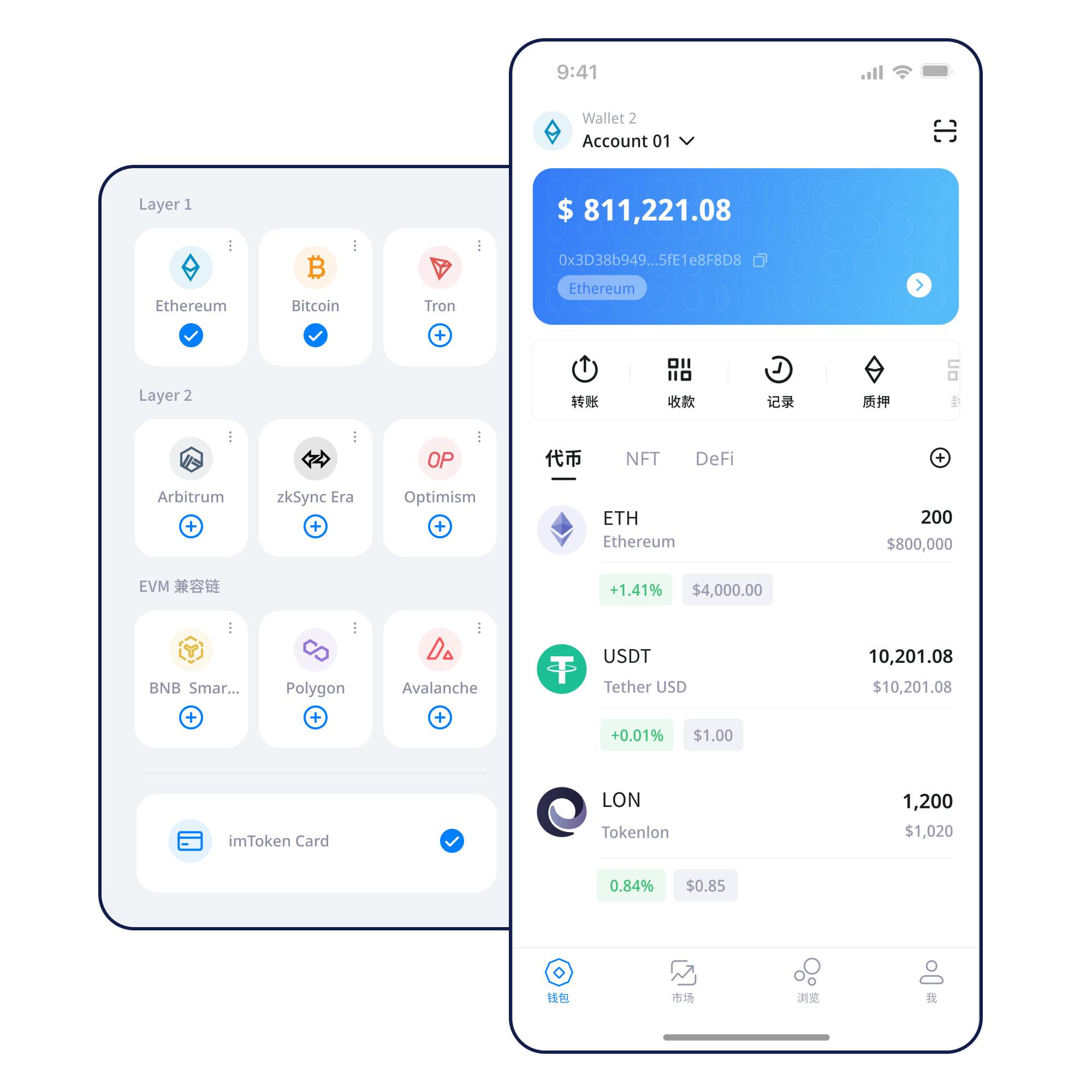
Keep the seed phrase offline and never send a private key or recovery phrase to another person.
Open guide →Confirm the receiving address and make sure the sender is using the intended blockchain network.
Open guide →Review recipient, network, amount and gas before signing, then verify the transaction hash.
Open guide →Check the domain, account request and every signature or approval independently.
Open guide →Wallet capabilities
Keep assets, networks and actions in the same context
A wallet is most useful when it helps you understand what network data means before you act on it.
Multi-chain assets
Balances from several networks can appear together, while token contracts, fees and confirmations remain network-specific.
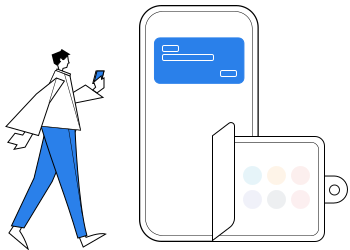
Send & receive
Check the recipient, network, amount, gas and transaction hash rather than relying on a single status label.
imtoken App
View assets, manage networks and check transaction history from a mobile workflow.
imtoken Web
Browser connections should be reviewed through domain identity, account requests, signatures and permissions.
Learn about Web connections →Wallet security
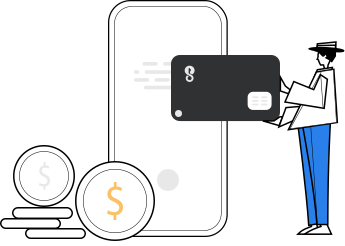
Keep recovery information offline and treat every signature or approval as an independent decision.
Blockchain networks
Choose the network before judging the transaction
Network identity comes before address appearance, token naming or interface familiarity.
Multi-chain
One wallet can display assets from multiple networks, but state, fees and contracts remain chain-specific.
Verify the selected network, address and asset identity before signing or transferring.
Public Chains
Nodes, blocks and confirmations explain how public networks record and verify state changes.
Verify the selected network, address and asset identity before signing or transferring.
EVM
EVM-compatible chains share execution concepts while keeping separate chain IDs, gas assets and token contracts.
Verify the selected network, address and asset identity before signing or transferring.
Layer 2
Layer 2 systems extend a base chain but can use separate bridges, confirmation paths and network settings.
Verify the selected network, address and asset identity before signing or transferring.
Gas & Confirmations
Fees reflect network resource demand. Transaction hashes and confirmations help describe processing state.
Verify the selected network, address and asset identity before signing or transferring.
Wallet journey
Six steps for a clearer wallet routine
01
Get imtoken
Use the single download entry and review the destination before continuing.
02
Create or import a wallet
Work in a trusted device environment and understand what recovery information controls.
03
Back up offline
Store the seed phrase offline and never disclose a private key.
04
Select and verify the network
Match the intended chain, address and asset before moving value.
05
Receive or send assets
Review the recipient, amount, fee and final signing details.
06
Check transactions and approvals
Use transaction hashes and periodically remove permissions you no longer need.
Web3 & DApp
Connection is only the beginning; review every request on its own
Connecting a wallet does not mean every later signature should be accepted. Review each signature and approval separately.
Open the Web3 guide →Visit a DAppOpen the service from a source you trust.
Confirm the domainLook for typos, redirects and unexpected host names.
Start the connectionReview which account information is requested.
Inspect account accessConnection does not equal permission to move assets.
Review signatures or approvalsRead the request and check the contract or spender.
Complete the intended actionConfirm the result matches what you planned.
Disconnect when finishedEnd the session and separately review lingering approvals.
Security
Protect recovery material and verify every action before it becomes irreversible
Wallet security works best as several independent layers. Keep seed phrases and private keys offline and under your own control; review DApp domains, signature requests, spender contracts and approval scope; keep the operating system current and avoid sensitive actions on shared computers or untrusted networks; verify the recipient, network, amount and fee before every transfer. imtoken staff will never ask for a seed phrase, private key or verification code, and a wallet cannot guarantee the safety of third-party DApps or smart contracts. If a request is unclear, stop before signing and return through a trusted entry point.
Open Security →- Back up the seed phrase offline
- Never disclose a private key
- Verify network and address
- Inspect signature requests
- Manage DApp approvals
What Should You Understand Before Using a Digital Wallet?
Start with addresses, seed phrases, private keys, networks, gas and transaction hashes, then move into DApps and approvals. Learning the concepts in the order they appear during real use makes security checks easier to remember.
Read the starter guide →Ethereum & PoS
Understand staking mechanics before deciding whether to participate
Ethereum Staking Basics
Proof of stake, validator duties, reward sources, withdrawals and exits are protocol concepts. Rewards can change and are not guaranteed.
Learn about Ethereum staking →Know the risks first
Validator penalties, waiting periods, smart-contract risk, third-party service risk and digital asset price volatility can all affect outcomes.
Read about PoS and validators →Updates
All updates →Product, network, security and service information
Recent Update
Wallet guidance now keeps network, transaction and approval checks in a clearer operating sequence.
Network Notice
Network content emphasizes transaction hashes, confirmations and chain-specific token identity.
Security Notice
Recovery secrets remain private; no support flow should request a seed phrase or private key.
Service Notice
Staking education explains variable rewards, exit waiting and validator risk without fixed-return language.
FAQ
View all FAQ →Common wallet and Web3 questions
What is a digital wallet used for?
Quick answer: A digital wallet helps manage addresses, display on-chain assets, initiate transactions and interact with DApps. The authoritative state of an asset still comes from the relevant blockchain network.
Why should a seed phrase be kept offline?
Quick answer: A seed phrase can often restore wallet control. Keeping it in cloud storage, chat history or other connected systems can increase exposure, so an offline backup under the user’s control is generally safer.
Can I give a private key to support for troubleshooting?
Quick answer: No. Legitimate support should not request a private key, seed phrase or verification code. Public transaction hashes and network details are usually enough to examine on-chain state.
What should I check before receiving assets?
Quick answer: Verify the receiving address and make sure the sender will use the intended network. For tokens, a contract address is a stronger identifier than a name or icon alone.
What should I check before sending assets?
Quick answer: Review the recipient, network, amount, estimated fee and final signing details. On-chain transactions generally cannot be reversed by the wallet alone.
What is gas?
Quick answer: Gas is a mechanism used by some blockchains to measure resources required for transactions or contract execution. Actual fees vary with network rules, complexity and demand.
What is a transaction hash used for?
Quick answer: A transaction hash identifies an on-chain transaction and can be used with a trusted block explorer to review sender, recipient, block, status and confirmations.
Move from learning to action with the same checks
Use the single download entry. Keep recovery material private and verify address, network and request details before confirming.